
Choosing the right civil litigation lawyer is one of the most important steps you can take when you are facing a legal dispute. Whether the issue involves a contract, unpaid debt, property disagreement, business conflict, negligence claim, or another non-criminal matter, the lawyer you choose can shape how clearly you understand your options, how effectively your case is handled, and how prepared you are for what comes next.
For many people in Ontario, the search starts in the middle of a stressful situation. You may be dealing with a broken agreement, a dispute that is getting more serious, or a claim that could affect your finances, business, or property. At that point, it is common to search for a civil litigation lawyer near me or wonder whether you need a civil litigation attorney at all.
The answer depends on the nature of the dispute, what is at stake, and how far the matter has progressed. Not every disagreement requires immediate legal action, but many disputes benefit from early legal guidance. Just as importantly, not every lawyer is the right fit for every case. Finding the right civil litigation lawyer Ontario clients can rely on means looking beyond advertisements and focusing on experience, communication, strategy, fees, and local knowledge.
What Does a Civil Litigation Lawyer Do?
A civil litigation lawyer helps individuals and businesses resolve non-criminal legal disputes. These disputes can arise in many settings, including personal, commercial, property, and estate-related matters. In Ontario, civil litigation may involve informal negotiations, demand letters, settlement discussions, mediation, motions, or full court proceedings depending on the complexity of the dispute and the stage the matter has reached.
In practical terms, a lawyer in this area may review contracts and correspondence, assess the strengths and weaknesses of a claim, gather and organize evidence, communicate with the opposing party or their counsel, prepare court documents, and represent clients during litigation. A good civil dispute lawyer does more than argue in court. They help clients make informed decisions, reduce avoidable risk, and choose the most practical path forward.
What Types of Cases Can a Civil Litigation Lawyer Handle?
A civil litigation attorney may handle a wide range of legal disputes. While every firm has its own focus, common civil litigation matters in Ontario can include contract disputes, debt collection claims, partnership disagreements, shareholder disputes, property conflicts, negligence claims, estate-related disputes, and certain Small Claims Court matters.
For example, if a business partner fails to honour an agreement, a contractor abandons a project, a tenant or landlord dispute escalates, or a party refuses to pay money that is owed, a civil litigation lawyer may be able to step in and advise on the next steps. Some matters remain relatively straightforward. Others become document-heavy, high-conflict, and procedurally complex. That is one reason choosing a lawyer with relevant experience matters.
When to Hire a Civil Litigation Lawyer
One of the most common questions people ask is when to hire a civil litigation lawyer. In many cases, earlier is better.
You may want to speak with a lawyer when a dispute is becoming serious, when a large amount of money is involved, when important legal rights may be affected, or when the other side has already involved counsel. You should also consider getting legal advice if you have received a demand letter, been served with a claim, or are worried about deadlines. In Ontario, limitation periods can apply to many civil matters, and waiting too long can create unnecessary risk.
Hiring a lawyer early does not always mean starting a lawsuit right away. Sometimes, it means understanding your position before taking action. A lawyer may help you preserve key documents, avoid damaging statements, respond properly to legal correspondence, and assess whether the matter is better handled through negotiation, mediation, Small Claims Court, or a higher court.
Why Choosing the Right Lawyer Matters
Many people assume that any lawyer who handles disputes will do. In reality, fit matters.
Civil litigation is not one-size-fits-all. A relatively narrow unpaid invoice claim may require a different approach than a contested business dispute or a negligence case with complicated evidence. Some lawyers are more experienced in commercial matters. Others may focus more heavily on estate litigation or property disputes. Some clients need a highly strategic and assertive approach. Others want a lawyer who is especially strong at negotiation and resolution.
The goal is not simply to find someone with the title of civil litigation lawyer. The goal is to find someone whose experience, communication style, and strategy suit your specific case.
How to Choose a Litigation Lawyer
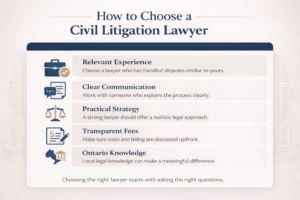
If you are wondering how to choose a litigation lawyer, start by looking at the factors that actually affect the client experience and the outcome of the file.
Look for Relevant Experience
The first thing to assess is whether the lawyer regularly handles civil disputes similar to yours. A lawyer may be experienced overall but still not be the right fit for a business conflict, contract claim, or property-related dispute if that is not a meaningful part of their practice.
During a consultation, ask whether they have handled similar matters before and what kinds of disputes they commonly work on. You do not need a promise of results. In fact, a lawyer who guarantees a result should raise concern. What you do want is a realistic explanation of the process, the main legal issues, and the possible paths your case could take.
Pay Attention to Communication
Clear communication is one of the strongest signs of a good civil litigation lawyer Ontario clients can trust. Legal disputes are stressful enough without confusion. A lawyer should be able to explain your position in plain language, outline the next steps, and tell you what they need from you.
You should leave a consultation with a better understanding of the case than you had before. If the lawyer is vague, rushed, difficult to follow, or unable to explain things clearly, that can become a bigger problem once the file is underway.
Ask About Strategy
Good litigation is not just about credentials. It is also about judgment.
A strong civil litigation attorney should be able to explain how they would generally approach a matter like yours. Would they start with a demand letter? Would they recommend trying to resolve the issue early? Do they see weaknesses that need to be addressed before taking a more aggressive step? Do they appear to understand the cost-benefit side of litigation?
These questions matter because a legal dispute is not only about being right. It is also about how to move forward practically and efficiently.
Understand the Fee Structure
Fees are an important part of choosing a lawyer, and they should be discussed clearly from the beginning. In Ontario, legal fees in civil matters can vary depending on the complexity of the file, the lawyer’s experience, the amount of work involved, the stage of the proceedings, and whether the matter settles early or continues through more extensive litigation.
Some lawyers bill hourly. Some require retainers. Some may use other fee structures depending on the nature of the matter. The important thing is transparency. You should understand how billing works, what disbursements may apply, how often you will receive invoices, and what kinds of developments could increase costs.
Choosing the right lawyer does not always mean choosing the lowest fee. It means choosing someone who is upfront, organized, and able to explain value and expectations clearly.
Consider Reputation and Professionalism
Reputation matters, but it should be assessed carefully. Online reviews can be one useful signal, but they are not the full picture. Look at whether the firm’s website reflects real knowledge of the area, whether their content is informative and professional, and whether they seem focused on the type of disputes they say they handle.
Professionalism also shows up in the basics. Are they responsive? Are they organized? Do they seem to listen? Do they treat your matter seriously during the initial conversation? Often, the early experience tells you a lot about how the working relationship may feel later.
Why Local Ontario Knowledge Matters
Hiring a civil litigation lawyer Ontario residents can work with locally has practical advantages. Ontario has its own court system, procedural rules, limitation periods, filing processes, and practice directions. A lawyer familiar with the province’s legal environment is often better positioned to provide grounded advice about timelines, court procedure, and the realities of moving a case forward here.
Local knowledge can also matter when a dispute may proceed in Small Claims Court or in the Superior Court of Justice. The lawyer should understand the procedural differences and be able to guide you toward the route that makes the most sense based on the facts and value of the claim.
For people searching online for a civil litigation lawyer near me, location is not only about convenience. It is also about choosing counsel who understands the local legal framework that will affect the case.
Questions to Ask During a Consultation
A consultation is your chance to evaluate whether the lawyer is the right fit. It is not just about whether they will take the file. It is also about whether you feel confident putting the matter in their hands.
You may want to ask what experience they have with disputes like yours, what the likely next steps may be, what risks they see at this stage, and whether the matter may be suitable for negotiation or settlement before litigation becomes more expensive. It is also wise to ask how they communicate with clients, whether you will be dealing directly with the lawyer or with support staff for some updates, and how fees are charged.
The answers should feel clear, measured, and practical. A good consultation should leave you more informed, not more confused.
Red Flags to Watch Out For
Just as there are signs of a strong lawyer, there are also warning signs.
Be cautious if a lawyer guarantees victory, avoids direct discussion about fees, seems uninterested in documents or details, or gives advice that sounds overly aggressive without acknowledging risk. A lawyer who is hard to reach before you hire them may also be difficult to reach after the file begins.
Another red flag is a poor fit in communication style. Even a technically capable lawyer may not be the right one for your matter if you consistently leave conversations unsure of what is happening or what to expect next.
Not Every Lawyer Is the Right Fit for Every Case
This point is worth emphasizing. Not every lawyer is the right fit for every dispute.
A lawyer may be highly competent and still not be the best match for your matter, your goals, or your budget. The right litigation law firm Ontario clients choose is often the one that combines relevant experience with practical judgment, strong communication, and an approach that fits the case. Some people need help with a focused dispute that may resolve quickly. Others need representation in a more involved conflict that requires a deeper litigation strategy.
The best decision often comes from comparing not just qualifications, but fit.
Frequently Asked Questions
What does a civil litigation lawyer do?
A civil litigation lawyer helps clients resolve non-criminal legal disputes. This may include reviewing contracts and evidence, advising on legal rights and risks, negotiating settlements, preparing court documents, and representing clients in court where necessary.
When should I hire a civil litigation lawyer?
You should consider hiring a civil litigation lawyer when a dispute is becoming serious, money or legal rights are at stake, the other side has involved a lawyer, or you have received a legal notice, demand letter, or court documents. Early legal guidance can help you avoid mistakes and better protect your position.
How do I choose a civil litigation lawyer in Ontario?
If you are wondering how to choose a litigation lawyer, start by looking for relevant experience, strong communication, practical strategy, transparent fees, and knowledge of Ontario court procedures. The right lawyer should also be a good fit for the specific type of dispute you are dealing with.
What types of cases does a civil litigation lawyer handle?
A civil dispute lawyer may handle matters such as contract disputes, debt collection claims, business disagreements, partnership disputes, property conflicts, negligence claims, estate-related disputes, and certain Small Claims Court matters. The exact focus will depend on the lawyer or firm.
Do I need a lawyer for a civil dispute in Ontario?
Not every civil dispute requires a lawyer, but legal guidance can be very helpful when the matter is complex, contested, financially significant, or already moving toward formal legal action. Even where a lawyer is not strictly required, early advice can help you understand your options and avoid unnecessary risk.
Can a civil litigation lawyer help settle a dispute without going to court?
Yes. Many disputes are resolved without a trial. A civil litigation attorney may help by sending demand letters, negotiating with the other side, participating in settlement discussions, or advising on mediation and other resolution options before the matter goes further.
How much does a civil litigation lawyer cost in Ontario?
The cost can vary depending on the complexity of the dispute, the lawyer’s experience, the amount of work involved, and the firm’s billing structure. Some lawyers bill hourly, while others may use different fee arrangements depending on the matter. It is important to ask about retainers, disbursements, billing frequency, and what factors could affect total cost.
Is it better to hire a local civil litigation lawyer in Ontario?
In many cases, yes. A civil litigation lawyer Ontario clients hire locally may have stronger familiarity with Ontario procedure, court processes, limitation periods, and the practical realities of litigating in this province. Local knowledge can make a meaningful difference in how a case is managed.
What questions should I ask a civil litigation lawyer before hiring them?
You should ask about their experience with similar disputes, how they would generally approach your case, what risks or challenges they see, how they communicate with clients, and how their fees are structured. A consultation should help you assess both their qualifications and whether they are the right fit for your matter.
What are red flags when choosing a civil litigation attorney?
Be cautious if a lawyer guarantees a result, avoids discussing fees clearly, seems disorganized, does not explain things well, or appears uninterested in the details of your case. Good legal representation should feel clear, professional, and realistic from the start.
Final Thoughts
Finding the right civil litigation lawyer is not about choosing the first name that appears in a search result. It is about finding someone who understands your type of dispute, communicates clearly, knows how civil matters work in Ontario, and can guide you through the process with sound judgment.
Whether you are dealing with a business disagreement, contract issue, debt collection matter, property conflict, negligence claim, or another civil dispute, the right lawyer can help you understand your options and take the next step with more clarity and confidence.
If you are currently looking for a civil litigation attorney or wondering how to choose a lawyer for a dispute in Ontario, starting with the right questions can make all the difference.
Disclaimer: This article is for general informational purposes only and does not constitute legal advice. Reading this content does not create a lawyer-client relationship. Legal issues depend on the specific facts of each case and the applicable law. For advice about your situation, speak with a qualified Ontario lawyer.